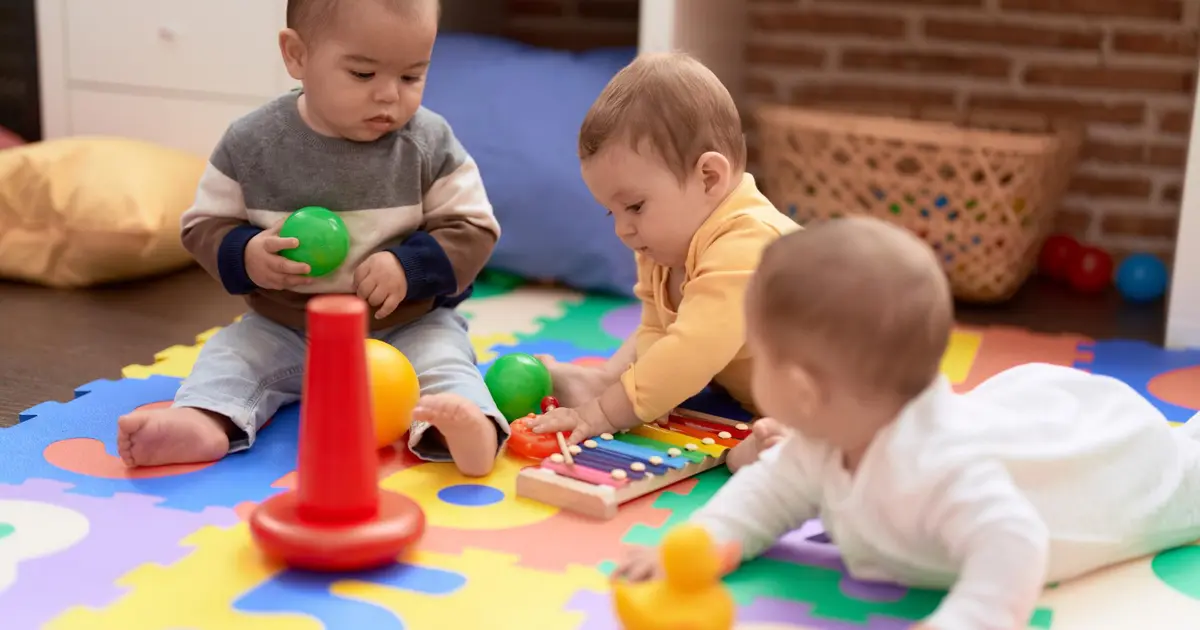
Ask any early childhood educator what the most powerful learning tool is for a young child, and the answer is almost always the same: play. Yet "play-based learning" is more than just children having fun — it is a scientifically grounded, curriculum-endorsed approach that shapes brain development, builds social skills, and lays the foundations for lifelong learning.
At Loving Start Childcare & Education in Healesville, play is at the heart of everything we do. Here's why.
What Is Play-Based Learning?
Play-based learning is an educational approach in which children acquire knowledge, skills, and understanding through play. Rather than sitting at desks completing worksheets, children explore, investigate, create, experiment, and collaborate — all within environments and activities carefully designed by skilled educators.
It is important to distinguish between free play (child-initiated, unstructured exploration) and intentional play-based learning (where educators deliberately set up provocations, environments, and interactions to extend children's thinking). The most effective early childhood programs use both.
The EYLF and Play-Based Learning
Australia's national early childhood curriculum — the Early Years Learning Framework (EYLF) v2.0: Belonging, Being and Becoming — explicitly recognises play as the primary vehicle for young children's learning. The EYLF describes play-based learning as "a context for learning through which children organise and make sense of their social worlds, as they engage actively with people, objects, and representations."
The EYLF outlines five learning outcomes that play-based experiences directly support:
| EYLF Outcome | What Play Develops |
|---|---|
| Outcome 1: Identity | Self-confidence, resilience, self-regulation |
| Outcome 2: Community | Empathy, collaboration, citizenship |
| Outcome 3: Wellbeing | Physical health, emotional regulation, happiness |
| Outcome 4: Learning | Curiosity, problem-solving, creativity |
| Outcome 5: Communication | Language, literacy, early numeracy |
At ACECQA-regulated centres like Loving Start, educators are required to implement learning programs that align with the EYLF and document how individual children are progressing toward these outcomes.
The Research: Why Play Works
The evidence for play-based learning is extensive and spans decades of research in developmental psychology, neuroscience, and education.
Cognitive Development
Play builds the neural pathways that underpin thinking, problem-solving, and academic achievement. When children build with blocks, they are experimenting with physics and early mathematics. When they engage in dramatic play, they are developing theory of mind — the ability to understand that other people have thoughts and perspectives different from their own. This cognitive flexibility is foundational for school readiness.
A landmark study by the American Academy of Pediatrics (2018) found that play, particularly free play, is essential to the development of executive function — the set of mental skills that includes working memory, flexible thinking, and self-control.
Language and Literacy
Pretend play is one of the most powerful drivers of language development in the early years. When children engage in role-play — acting as doctors, chefs, teachers, or superheroes — they practise narrative thinking, build vocabulary, and develop the capacity to sequence events. Studies consistently show that children in play-rich environments develop stronger oral language skills, which are the single strongest predictor of later reading success.
Social and Emotional Learning
Through play, children learn to negotiate, share, take turns, manage frustration, and resolve conflict. These are not trivial skills — they are the foundations of emotional intelligence, which research increasingly links to success in school, work, and relationships.
In group play settings, children also develop empathy — the ability to understand and respond to the feelings of others. A 2020 meta-analysis published in *Early Childhood Education Journal* found that children in play-based preschool programs showed significantly higher levels of pro-social behaviour than those in academically direct instruction programs.
Physical Development
Active, outdoor play develops gross motor skills (running, jumping, climbing, balancing) while fine motor skills (drawing, cutting, manipulating small objects) emerge through hands-on craft and construction activities. Strong motor development is directly linked to early writing skills and physical health.
In the Yarra Valley setting of Healesville, children at Loving Start have access to the kind of natural outdoor environments that encourage rich physical play — fresh air, open space, and the sensory richness of the natural world.
Play-Based Learning vs. Academic Drilling: What the Evidence Says
Many parents wonder: shouldn't children be learning letters and numbers instead of playing? The research is clear — drilling academic content too early can actually be counterproductive.
A well-known study by Dr. Sebastian Suggate (2009) found that children who learned to read later through play-based approaches caught up and surpassed children who were drilled in formal literacy skills from age four, by age eleven. Children who are developmentally ready to learn formal skills absorb them far more effectively.
This does not mean play-based centres ignore literacy and numeracy — quite the opposite. Quality programs embed numeracy in every block-building session, and literacy in every story, label, and conversation. The key is that learning emerges naturally from children's interests and experiences.
How Loving Start Implements Play-Based Learning
At Loving Start Childcare & Education in Healesville, our EYLF-aligned program weaves play-based learning throughout every aspect of the day:
- Provocation stations set up with open-ended materials to spark curiosity and investigation
- Nature play using our outdoor spaces and the natural Yarra Valley environment
- Dramatic play corners that change regularly based on children's interests and community themes
- Shared reading and storytelling to build language and a love of literacy
- Intentional teaching moments woven into play by qualified educators
- Individual learning journals that document each child's unique learning journey
Our educators are trained to observe, extend, and document children's play — ensuring that every experience is rich with learning potential.
Frequently Asked Questions About Play-Based Learning
Q: Is play-based learning the same as unstructured free time?
A: No. Quality play-based learning involves intentional planning by educators. The environment, materials, and interactions are carefully designed to provoke curiosity and extend children's thinking, even while children appear to be freely playing.
Q: Will my child be ready for school if they attend a play-based program?
A: Yes — and often better prepared than peers from academically pressured environments. Play-based learning builds the executive function, language, social skills, and curiosity that primary school teachers identify as the most important foundations for school success.
Q: How does Loving Start document my child's learning?
A: Our educators use digital learning documentation platforms to record observations, photographs, and learning stories. Families receive regular updates and can see how their child is progressing against the EYLF outcomes.
Give Your Child the Best Start Through Play
Play is not a break from learning — it is learning. At Loving Start Childcare & Education, we believe every child in Healesville deserves a joyful, play-rich early childhood experience that sets them up for life.
Book a tour to see our play-based program in action:
- Call us: 03 5905 3735
- Email: Healesville@Lovingstart.com.au
- Visit: 349–353 Maroondah Hwy, Healesville VIC 3777