
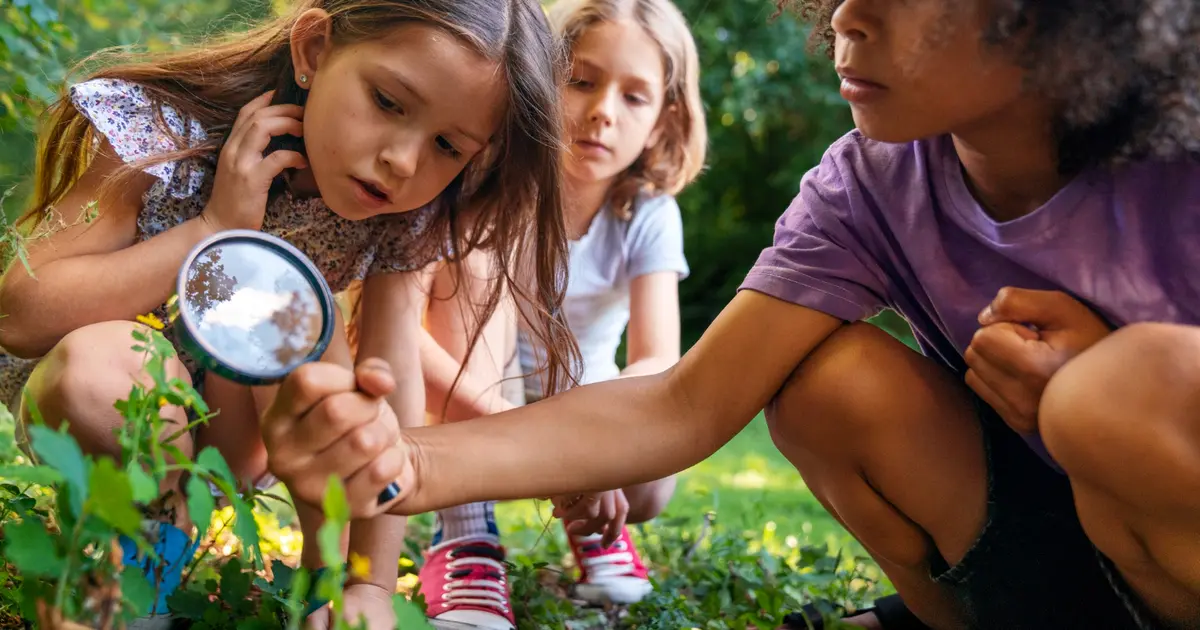
Something remarkable happens when you take a group of young children outside. The hesitant child becomes a climber. The quiet child becomes a narrator — "Look! A beetle!" The child who struggles to sit still for ten minutes can focus for an hour on a hole they're digging in the garden. The outdoors does not just supplement children's development — it transforms it.
At Loving Start Childcare & Education in Healesville, we are uniquely positioned to use one of Australia's most remarkable natural environments — the Yarra Valley — as an active classroom. Here is why outdoor learning is not a luxury but a developmental necessity.
What the Research Tells Us
The evidence for outdoor learning in early childhood has grown substantially over the past two decades. A 2023 systematic review published in *Educational Research* (Taylor & Francis), drawing on 20 international studies from 10 countries, identified six key benefit categories of outdoor learning in early childhood settings:
- Children's holistic development — social, personal, physical, and cognitive growth
- Health and wellbeing — increased physical activity, better sleep, improved mood
- Multimodal, hands-on learning — using all senses in authentic exploration
- Experiences in and of nature — building environmental awareness and ecological identity
- Enhanced creativity — the unstructured natural environment sparks imaginative play
- Improved concentration — studies consistently show that children focus better after outdoor time
The Australian Institute of Family Studies (AIFS) has also highlighted that a systematic review of 147 international studies found moderate to strong evidence that nature-specific outdoor learning has measurable socio-emotional, academic, and wellbeing benefits for children from preschool through to high school age.
Why Outdoor Learning Matters in the Early Years Specifically
The first five years of life are a critical period for brain development. During this window, the neural architecture that will underpin learning, emotional regulation, language, and physical capability is being built at a remarkable rate. The experiences children have — sensory, social, physical — directly shape this development.
Physical Development
Outdoor play develops both gross motor skills (running, climbing, balancing, jumping) and fine motor capabilities (digging, manipulating natural objects, building). Children who spend significant time in active outdoor play show stronger physical coordination, healthier cardiovascular development, and lower rates of childhood obesity.
Research published in early childhood journals consistently shows that children are significantly more physically active outdoors than indoors — often two to three times more active. In an era of growing concern about sedentary childhood, this matters enormously.
Cognitive and Academic Benefits
Being in nature enhances concentration and attention. A well-cited body of research (Kuo, Barnes & Jordan, 2019) found that exposure to natural environments improves children's ability to focus — with implications for classroom learning readiness. Children who learn in nature-rich environments also show stronger pre-academic skills, including early literacy and numeracy, and higher levels of curiosity and intrinsic motivation.
Nature also provides the richest possible context for authentic science learning. Turning over a rock reveals ecosystems. Watching seeds sprout teaches biology. Measuring rainfall teaches mathematics. The outdoors is not a break from curriculum — it is the curriculum's most powerful application.
Social and Emotional Learning
The outdoors creates social scenarios that indoor environments simply cannot replicate. Children negotiate who gets the stick, decide how to solve the problem of a blocked waterway in the sandpit, take turns on the swings, and navigate conflict in real time. These are not trivial experiences — they are the training ground for emotional intelligence, empathy, and collaboration.
Research by Zamani (2016) found that the natural environment stimulated children to work more as a team, sparking interaction during practical, hands-on activities that improved children's sense of responsibility, competence, and social-emotional skills. Children also assumed leadership roles more readily outdoors than indoors.
Connection to Nature and Environmental Identity
Children who develop a connection to the natural world in their early years are more likely to become environmentally conscious and ecologically engaged adults. This is not a trivial outcome — as the challenges of climate change and biodiversity loss become the defining issues of our children's lives, instilling a deep love for and understanding of the natural world is an act of profound educational responsibility.
In the Yarra Valley, with its mountain ash forests, native wildlife, rivers, and remarkable biodiversity, children at Loving Start have daily opportunities to develop this connection in a way that few urban settings could offer.
The Yarra Valley: Nature's Classroom
Healesville and the surrounding Yarra Valley provide an unmatched natural context for outdoor education. The region is home to:
- Yarra Ranges National Park — ancient mountain ash forests, lyrebirds, and extraordinary biodiversity
- Healesville Sanctuary — world-class native wildlife encounters metres from our centre
- Maroondah Reservoir Park — accessible natural bushland for walks, observation, and exploration
- The upper Yarra River corridor — waterways that teach children about ecosystems, seasons, and care
At Loving Start, our outdoor program draws on this remarkable context. Our purpose-built outdoor spaces are designed to offer natural elements — digging areas, loose parts, gardens, and spaces that connect children to seasonal change and the living world.
We embrace the principles of nature play: unstructured, child-led engagement with natural materials and environments that builds curiosity, creativity, and confidence. Nature play is now recognised by bodies including the Australian Institute of Family Studies as a key contributor to children's health and wellbeing.
Bush Kinder and Nature-Based Education in the Yarra Valley
The bush kinder movement — which takes early learning outdoors to natural settings — has grown significantly across Australia in recent years. The Yarra Valley is particularly well-suited to nature-based early education: the climate, the landscape, and the community culture all support it.
At Loving Start, while we operate as a Long Day Care and OSHC service rather than a dedicated bush kinder, we incorporate nature-based learning principles throughout our program:
- Regular outdoor learning sessions in our purposefully designed natural play spaces
- Seasonal observations and nature journals for older children
- Gardening and composting programs that build ecological literacy
- Incursions from wildlife educators and environmental organisations
- Excursions to Healesville Sanctuary, Maroondah Reservoir, and other local natural sites
How Outdoor Learning Aligns With the EYLF
Australia's Early Years Learning Framework (EYLF) explicitly supports outdoor learning as a core component of quality early childhood education. The EYLF's emphasis on place-based learning, children's connection to their world (Outcome 2), and their physical wellbeing (Outcome 3) is directly served by quality outdoor learning programs.
ACECQA — the body that regulates and assesses childcare quality — notes in its guidance materials that "the outdoors gives us opportunities to have meaningful conversations about things that children are experiencing, feeling, and seeing" and that children who spend time outdoors "become physically fit, strong, healthy and highly coordinated... emotionally resilient... and socially cooperative."
Practical Tips for Outdoor Learning at Home
Parents can extend the benefits of outdoor learning beyond the childcare day:
- Spend time outdoors daily — even 20–30 minutes of unstructured outdoor play makes a difference
- Let children lead — resist the urge to organise or direct outdoor play; follow your child's interests
- Notice nature together — point out birds, insects, plants, and seasonal changes
- Provide loose parts — sticks, stones, leaves, and water are the best toys
- Get messy — mud, dirt, and sand are developmentally rich, not dangerous
- Visit local natural places — Healesville Sanctuary, Maroondah Reservoir, and local parks are on your doorstep
- Garden together — even a small pot of herbs on a balcony connects children to growth and care
Experience the Difference at Loving Start
At Loving Start Childcare & Education, our commitment to outdoor learning is reflected in our purpose-built outdoor spaces and our EYLF-aligned program. We believe that every child in Healesville should have the opportunity to learn in and from the remarkable natural environment that surrounds them.
Book a tour and see our outdoor spaces for yourself:
- Call us: 03 5905 3735
- Email: Healesville@Lovingstart.com.au
- Visit: 349–353 Maroondah Hwy, Healesville VIC 3777